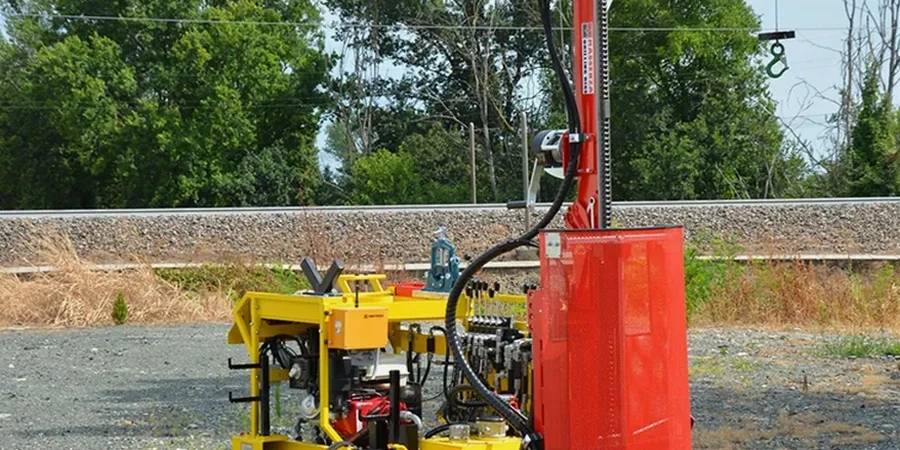
Juneau sits on a narrow strip of land between the Coast Mountains and Gastineau Channel, where subsurface conditions shift dramatically over short distances. Much of the downtown and Mendenhall Valley areas are underlain by glacial till, marine clay, and raised beach deposits that can vary from dense gravel to soft silt within the same borehole. The water table sits high across the valley floor, and seasonal groundwater fluctuations are common. For any project involving footings, retaining structures, or slope cuts, the Standard Penetration Test remains the most practical way to measure relative density and consistency directly in the field. Because the city lacks road connections to the outside, mobilizing a drill rig here requires advance planning for barge or ferry transport, so we coordinate logistics tightly with local contractors. When soil conditions suggest complex layering, pairing SPT data with a CPT test can refine the stratigraphic profile, especially where soft clays and silts dominate the upper 20 feet.
Juneau's glacial history left behind soils that range from dense till to compressible marine clay within the same property. A few feet of missing data can turn a straightforward foundation into a long-term settlement problem.
Site-specific factors
In Juneau, we frequently see projects where designers assume uniform bearing capacity across a site because one exploratory boring showed decent blow counts. The reality is more complicated. Glacial outwash channels, buried organic layers, and pockets of marine clay can go undetected if the boring pattern is too sparse. One client in the Mendenhall Valley learned this the hard way when differential settlement cracked a slab-on-grade within 18 months. The culprit was a 3-foot lens of soft silt at 8 feet depth, missed by a single boring at the opposite end of the building. A proper SPT grid with at least three borings for a typical commercial lot would have caught it. Skipping adequate subsurface investigation in Southeast Alaska means risking structural damage, costly repairs, and delays that are magnified by the region's short construction season and high material shipping costs.
Quick answers
What does an SPT test cost for a residential project in Juneau?
For a typical single-family residential lot in the Juneau area, SPT testing generally ranges from US$500 to US$870 depending on the number of borings, depth, access conditions, and mobilization logistics. Sites in areas like Douglas Island or out the road may involve additional transport costs due to barge or extended travel. We deliver a firm quote after reviewing the site plan and access constraints.
How many SPT borings does the IBC require for a commercial building?
The International Building Code does not prescribe a fixed number of borings. Instead, Section 1803 requires a geotechnical investigation sufficient to evaluate soil properties, groundwater, and potential hazards. For a typical commercial structure in Juneau, we recommend a minimum of three borings spaced to capture variability, with depth extending at least 10 feet below the anticipated foundation bearing level. Sites with known soft clay zones or high groundwater may require deeper exploration and additional borings to meet the standard of care.
How does high groundwater affect SPT results in the Mendenhall Valley?
High groundwater does not invalidate SPT results, but it requires careful interpretation. In saturated fine sands and silts below the water table, the measured N-value can be lower than the true resistance due to reduced effective stress. We apply correction factors for overburden pressure and, when needed, measure hammer energy efficiency to adjust blow counts. We also note the water level at the time of drilling, because seasonal fluctuations in Juneau's wet climate can shift the groundwater table several feet between spring and fall.
What is the difference between SPT and CPT for Juneau soils?
SPT provides a disturbed soil sample that we can visually classify and test in the lab, which is essential in Juneau's variable glacial and marine deposits. CPT pushes an instrumented cone into the ground and gives continuous readings of tip resistance and sleeve friction without sampling. CPT is faster and produces a nearly continuous profile, but it cannot recover soil for laboratory testing. In practice, we often recommend SPT for initial exploration and supplement with CPT at sites where thin soft layers are suspected and continuous profiling would reduce uncertainty.