← Home · Investigation

CPT Testing in Juneau Alaska: Reliable Cone Penetration for Southeast Terrain

Together, we solve the challenges of tomorrow.

LEARN MORE →

In Juneau we run into a lot of sites where the ground just doesn't cooperate with standard drilling. You've got glacial till packed tight against bedrock, layers of marine clay left from when the glacier sat higher, and water tables that fluctuate fast with the tide and rainfall. A CPT rig pushes a cone through all of that and gives us continuous data on tip resistance, sleeve friction, and pore pressure in real time. For projects near the Mendenhall Valley or along Gastineau Channel, understanding what lies beneath the fill is half the battle. We often run CPT testing ahead of foundation design to map out the soft zones before they become a problem during excavation. In places where the organics run deep, like out by the wetlands, pairing CPT with a test pit program helps us calibrate the electronic readings against visual soil samples.

CPT gives you a continuous profile through Juneau's glacial clays—no gaps, no remolding, just real-time data you can use the same day.

How we work

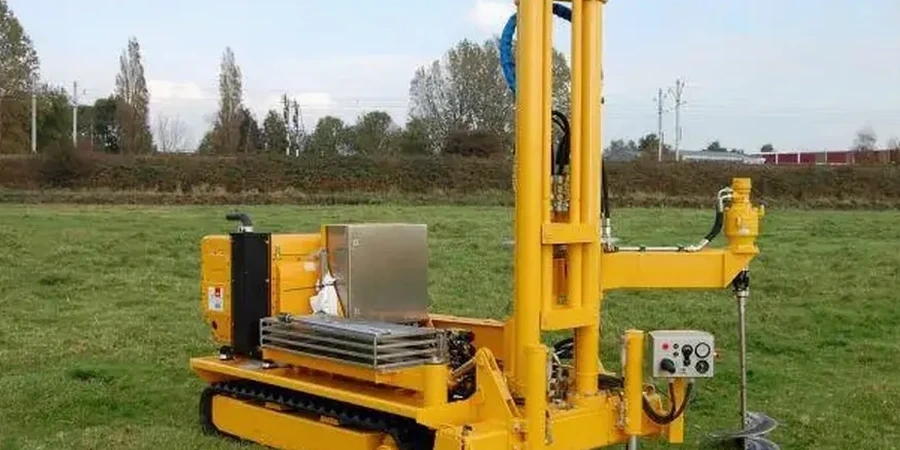
The rig we use around Juneau is a 20-ton tracked unit that can handle the tight approach roads and sloping lots common in Douglas or up in the valley. It pushes a 15 cm² cone with a standard 60-degree tip at 2 cm per second, logging sleeve friction, pore water pressure, and tip resistance simultaneously. The electronics are rated for the wet conditions we get here—Southeast Alaska doesn't give you many dry days. Data comes through in real time via a digital acquisition system, and we can correlate the soil behavior type directly using Robertson's charts on site. For deeper profiles down to 30 meters where the glacial sediments transition to bedrock, we've found CPT gives a much cleaner picture of stratigraphy than standard penetration testing alone. When we need shear wave velocity, we add a seismic module to the cone, which becomes critical input for any liquefaction assessment required by the local building official.
CPT Testing in Juneau Alaska: Reliable Cone Penetration for Southeast Terrain
Technical reference image — Juneau Alaska

Site-specific factors

Juneau's soil profile is rarely uniform. The Mendenhall Glacier left behind a mess of ablation till, lacustrine silts, and outwash sands that can change over just a few hundred feet. You might hit a dense till layer at 5 meters in one push and find 15 meters of soft clay in the next. The biggest risk we see is designers assuming conditions based on nearby borings without confirming the lateral variability. CPT helps close that gap because each push is fast and relatively low-cost compared to mobilizing a drill rig multiple times. Another issue is pore pressure buildup in the silts during penetration—if you don't account for it, the interpreted strength can be off. We correct for that in real time and flag any zones where the soil behavior type index suggests potentially liquefiable material, which matters a lot given the seismic hazard in coastal Alaska.

Need a geotechnical assessment?

Reply within 24h.

Email: info@geotechnicalengineering.sbs

Video resource

Technical data

ParameterTypical value
Cone tip area15 cm² (standard)
Penetration rate2 cm/s ± 10%
Maximum depth capacityUp to 30 m in local soils
Parameters loggedqc, fs, u2 (pore pressure)
Seismic moduleShear wave velocity (Vs) optional
Data acquisitionDigital, real-time readout
Applicable standardASTM D5778

Associated technical services

01

Standard CPT Sounding

Single or multiple pushes logging tip resistance, sleeve friction, and pore pressure. Ideal for foundation investigations in the Mendenhall Valley and downtown Juneau.

02

Seismic CPT (SCPT)

Adds a geophone array to measure shear wave velocity profiles. Essential for site classification per ASCE 7 and liquefaction triggering analysis.

03

Piezocone Dissipation Tests

Pauses the push to monitor pore pressure decay. Gives us in-situ estimates of consolidation coefficient, useful for settlement predictions in the marine clays along the channel.

04

CPT for Pavement Subgrade

Shallow pushes to map soft spots in road subgrades and parking lot expansions. We correlate tip resistance directly to CBR for pavement design.

Relevant standards

ASTM D5778 – Standard Test Method for Electronic Friction Cone and Piezocone Penetration Testing of Soils, ASCE 7-22 – Minimum Design Loads and Associated Criteria for Buildings and Other Structures, IBC 2021 (adopted by CBJ) – International Building Code with local amendments, ASTM D2487 – Standard Practice for Classification of Soils for Engineering Purposes (Unified Soil Classification System)

Quick answers

How much does a CPT test cost in Juneau?

For a standard CPT sounding in the Juneau area, the cost typically ranges from US$170 to US$240 per meter, with the final figure depending on access conditions, number of pushes, and whether you need seismic or dissipation modules. Mobilization to sites along the road system is straightforward, but if the location requires barge access or helicopter support, that adds to the total. We give a firm quote after reviewing the site coordinates and depth requirements.

Is CPT better than SPT for Juneau's soils?

Each has its place. CPT gives a continuous profile with no sample disturbance and works well in the soft clays and silts common here. SPT is still useful when you need a physical sample for lab testing or when you hit gravelly till that stops the cone. We often recommend a mixed program—CPT for stratigraphy and pore pressure, with a few SPT borings to recover samples for index testing.

Can CPT be done in the winter?

Yes, as long as the ground isn't frozen deeper than about 30 cm. Juneau winters are relatively mild compared to the Interior, so we operate year-round. The tracked rig handles snow and wet ground well. We do avoid pushing during heavy rain events when slope access becomes unsafe.

How deep can the CPT rig push in glacial soils?

In the silts and clays of the Mendenhall Valley we can reach 25 to 30 meters without much trouble. When we encounter dense till or gravel lenses, the cone may refuse earlier. We monitor tip stress in real time and stop the push before damaging the rods if the bearing gets too high.

What does the City and Borough of Juneau require for geotechnical reports?

CBJ follows the IBC and references ASCE 7 for seismic provisions. Most commercial projects need a site-specific shear wave velocity profile for seismic site classification. CPT with the seismic module satisfies this directly. We also include soil behavior type charts and liquefaction screening when the water table is within 15 meters of the surface, which covers most of Juneau's developable land.
Location and service area

We serve projects in Juneau Alaska and surrounding areas. More info.

View larger map