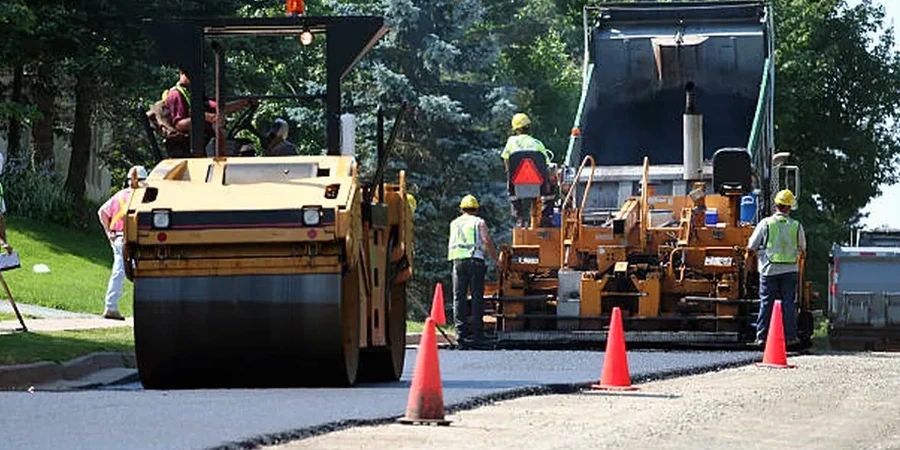
Few design errors prove costlier in Southeast Alaska than underestimating the bearing capacity of saturated glacial till beneath a new roadway. In Juneau, where annual precipitation exceeds 220 centimeters at sea level—much of it falling as rain on snow during rapid thaw cycles—the subgrade rarely stays dry long enough to hit standard compaction targets. We regularly see imported base course lose its structural contribution within two seasons because the drainage layer was either omitted or undersized. A proper CBR road assessment run directly on the native silty gravels of the Mendenhall outwash plain gives designers a real in-situ strength value, not a textbook assumption that collapses under traffic loads. When the Alaska Department of Transportation specifies a 20-year design life for a collector road winding past Lemon Creek, the pavement section must account for freeze-index depths that reach 1.8 meters in exposed cuts and for the perched groundwater that sits just centimeters below the moss line.
Pavement sections designed without local freeze-index data fail three to five years early in Juneau’s coastal transition zone.
Site-specific factors
Juneau’s climate punishes flexible pavements from two directions simultaneously: relentless surface moisture and sub-zero subgrade temperatures that lock water into ice lenses. When a cold snap follows a week of heavy rain—common from October through December—the trapped water in the upper 60 centimeters of base course freezes and expands, lifting the asphalt by 20 to 40 millimeters in isolated patches. The real damage comes during the spring thaw, when the ice lenses melt from the top down and create a saturated, near-liquid layer trapped beneath an intact crust. A single loaded dump truck passing over that softened pocket can pump fines upward and initiate a pothole that grows to full lane width by midsummer. Steep grades above 7 percent, typical on Douglas Island and in the valley neighborhoods, add shear stress that accelerates rutting and shoving in the asphalt layers. Our pavement designs counteract this by specifying open-graded drainage blankets at the subgrade interface and by increasing the structural number by 0.3 to 0.5 above the AASHTO default for the Juneau precipitation zone.
Relevant standards
ASCE 7-22 (Minimum Design Loads for Buildings and Other Structures), IBC 2024 Chapter 18 (Soils and Foundations, frost protection provisions), ASTM D1586 (Standard Penetration Test for subgrade investigation), ASTM D2487 (Unified Soil Classification System for base and subgrade materials), AASHTO Guide for Design of Pavement Structures (1993 with Alaska-specific supplements)
Quick answers
What is the typical frost depth used for pavement design in Juneau?
We use a design frost depth of 1.8 meters for exposed road cuts and 1.2 meters for sections under forest canopy, based on historical freeze-index data from the Juneau International Airport weather station. The deeper value applies to wind-exposed alignments like Glacier Highway where snow cover is minimal and frost penetrates significantly deeper than in sheltered valleys.
How much does a flexible pavement design for a residential driveway cost in Juneau?
For a typical residential driveway design in the Juneau area, the total fee ranges from US$1,440 to US$4,530 depending on the length of the access road, the complexity of the subgrade conditions, and whether field CBR testing must be conducted on saturated late-summer soils. Commercial collector or arterial road designs fall on the higher end due to the heavier traffic loading analysis and the need for multiple cross-sections.
Can existing gravel roads in Juneau be overlaid with asphalt without full reconstruction?
Yes, but only after a thorough structural evaluation of the existing gravel section. We conduct deflection testing with a falling weight deflectometer and extract samples to verify the thickness and gradation of the existing base. If the gravel has been contaminated by fines migration from the subgrade—common on older Douglas Island roads—we specify a geogrid-reinforced separation layer before placing the asphalt overlay to prevent reflective pumping failures.