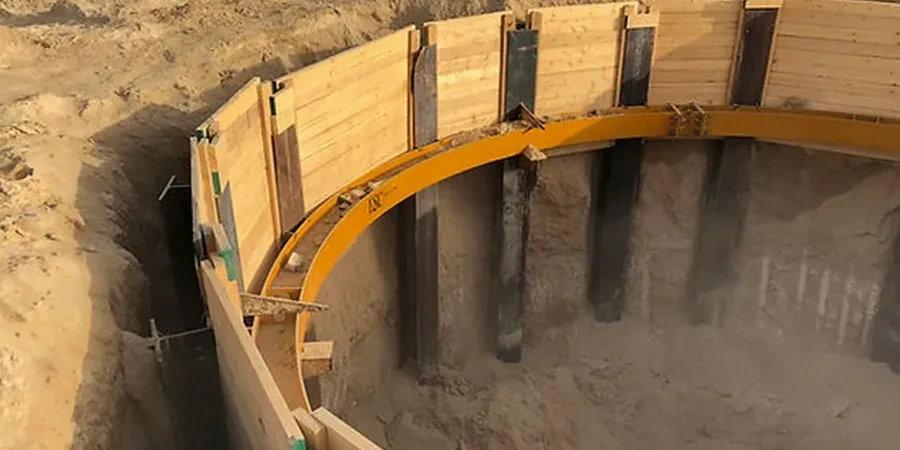
We were brought in a few years ago to review a mixed-use development slated for the Gastineau Channel waterfront. The structural team had proposed a spread footing system based on a preliminary desktop study. Within the first ten feet of the test pits we advanced, the soil profile told a different story: interbedded layers of soft organic silt and dense glacial till, with a perched water table fluctuating with the tide. Juneau's subsurface rarely forgives assumptions. That project—and many since—reinforced why deep foundations, whether driven steel H-piles or drilled micropiles socketed into the underlying till, are often the only viable path when you're building on these deposits within a few hundred feet of salt water. The combination of high seismicity along the Fairweather-Queen Charlotte fault system and the compressible clays that blanket much of the downtown corridor means your foundation design has to accommodate both settlement and lateral demand from day one. We have since made it standard practice to integrate the CPT test early in the exploration phase to map the transition from the soft marine clay to the stiffer glacially overridden sediments without relying solely on disturbed samples.
In Juneau's glaciomarine clay, a pile that isn't socketed into competent till is effectively a column waiting for seismic settlement to demand a redesign.
Relevant standards
IBC (International Building Code, 2021 edition, Chapter 18 – Soils and Foundations), ASCE/SEI 7-22 (Minimum Design Loads and Associated Criteria for Buildings and Other Structures), ASTM D1586 (Standard Test Method for Standard Penetration Test and Split-Barrel Sampling of Soils), ASTM D1143/D1143M (Standard Test Methods for Deep Foundation Elements Under Static Axial Compressive Load), ADOT&PF Bridge Design Manual (Section 10 – Foundations, for corrosion and scour provisions)
Quick answers
What does a pile foundation design package for a Juneau waterfront project typically cost?
The professional fee for a complete pile design package—including the geotechnical report, axial and lateral capacity calculations, and signed construction drawings—runs between US$1,690 and US$5,650 for a typical moderate-sized commercial structure. The exact figure depends on the number of borings already available, the complexity of the load cases (e.g., vessel impact or ice loading), and whether a pile load test program must be designed and supervised. We deliver a fixed-fee proposal after reviewing your structural plans and any existing subsurface data.
How do you determine the required pile length in the variable glacial deposits under Juneau?
We correlate multiple data sources: SPT blow counts from mud-rotary borings, CPT tip resistance and sleeve friction profiles, and laboratory consolidation tests on undisturbed clay samples. The key design parameter is the depth to the top of the dense basal till, which we define as the elevation where the undrained shear strength exceeds 100 kPa and the SPT N-value stays above 40 for at least five feet. In the Mendenhall Valley this surface can be 35 to 60 feet below grade; downtown near South Franklin Street it's often shallower, around 20 to 35 feet. We always confirm the socket length with at least one test pile instrumented with strain gauges.
What pile type performs best in Juneau's high-seismic and corrosive marine environment?
There's no universal answer, but driven H-piles (HP sections) and closed-end steel pipe piles have been the workhorses in Southeast Alaska for decades. H-piles deliver excellent plugging action in the dense till and are easier to splice in the field. For sites where vibration during driving is restricted or where boulders prevent driving, we shift to drilled micropiles with a threaded bar and double corrosion protection (DCP) using corrugated sheathing and factory-applied epoxy. All steel elements in the intertidal and splash zone receive a coal tar epoxy coating or an additional sacrificial steel thickness per ADOT&PF guidelines. We select the specific section and coating system during the detailed design phase based on the soil chemistry and resistivity data from the site investigation.
How long does the pile foundation design process take from investigation to stamped drawings?
A realistic timeline for a project with a single building footprint runs about four to five weeks from mobilization of the drill rig to delivery of the stamped design. That breaks down into one week for fieldwork (CPT and borings), two weeks for laboratory testing and engineering analysis, and one to two weeks for report drafting, peer review, and Alaska-registered engineer stamping. If the project requires a pre-production pile load test to refine the design parameters, add an extra two to three weeks to install the test pile, set up the reaction frame, execute the test, and analyze the data. We coordinate closely with the structural engineer of record so that the pile design proceeds in parallel with the superstructure development.